Concentrated plant nutrition
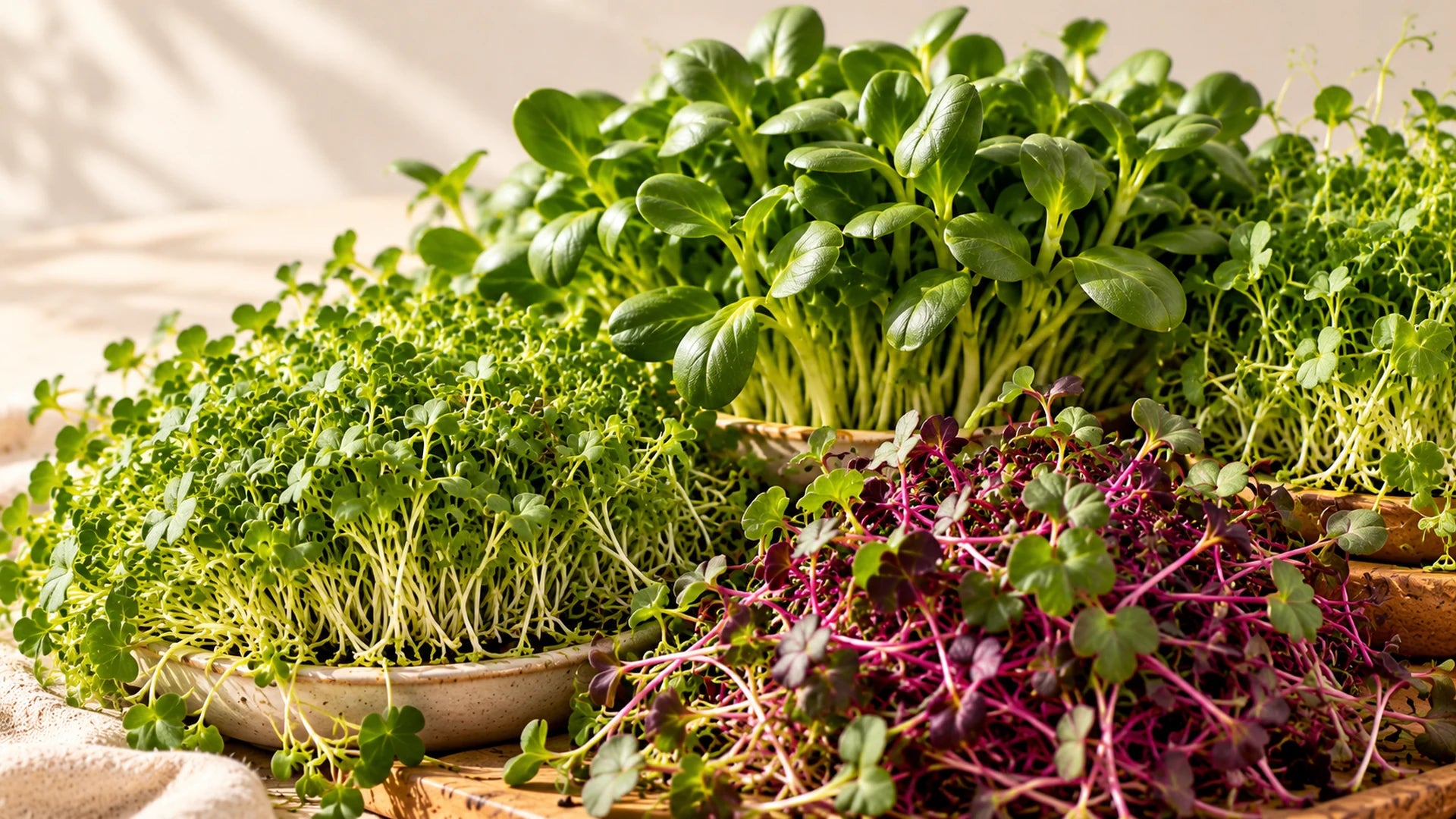
Microgreens are young vegetables with high concentrations of nutrients and beneficial plant compounds. A small amount can add a surprising range of plant nutrition to food you already eat.
Why the early harvest matters →Fresh microgreens • Northern Virginia
Fresh, nutrient-dense microgreens grown locally and delivered to your fridge—most within 24 hours of harvest. An easy upgrade to the vegetables you already eat.

The everyday part
Knowing what’s healthy is one thing. Making it easy enough to do consistently is another.
Fresh produce still has to be bought, kept stocked, prepared, remembered, and used. Han’s Greens puts something fresh, nutrient-dense, and ready to use in your fridge.
Why Han's Greens
Freshness, concentrated plant nutrition, and almost no prep—built around making the healthy choice easier to repeat.
Microgreens are young vegetables with high concentrations of nutrients and beneficial plant compounds. A small amount can add a surprising range of plant nutrition to food you already eat.
Why the early harvest matters →We grow locally, harvest close to delivery, minimize handling, and get most orders from harvest to your fridge in less than 24 hours.
Why freshness matters →No chopping. No cooking. No complicated recipe. Open the box, grab a handful, and add them to food you already enjoy.
See how people use them →
The easiest way to start
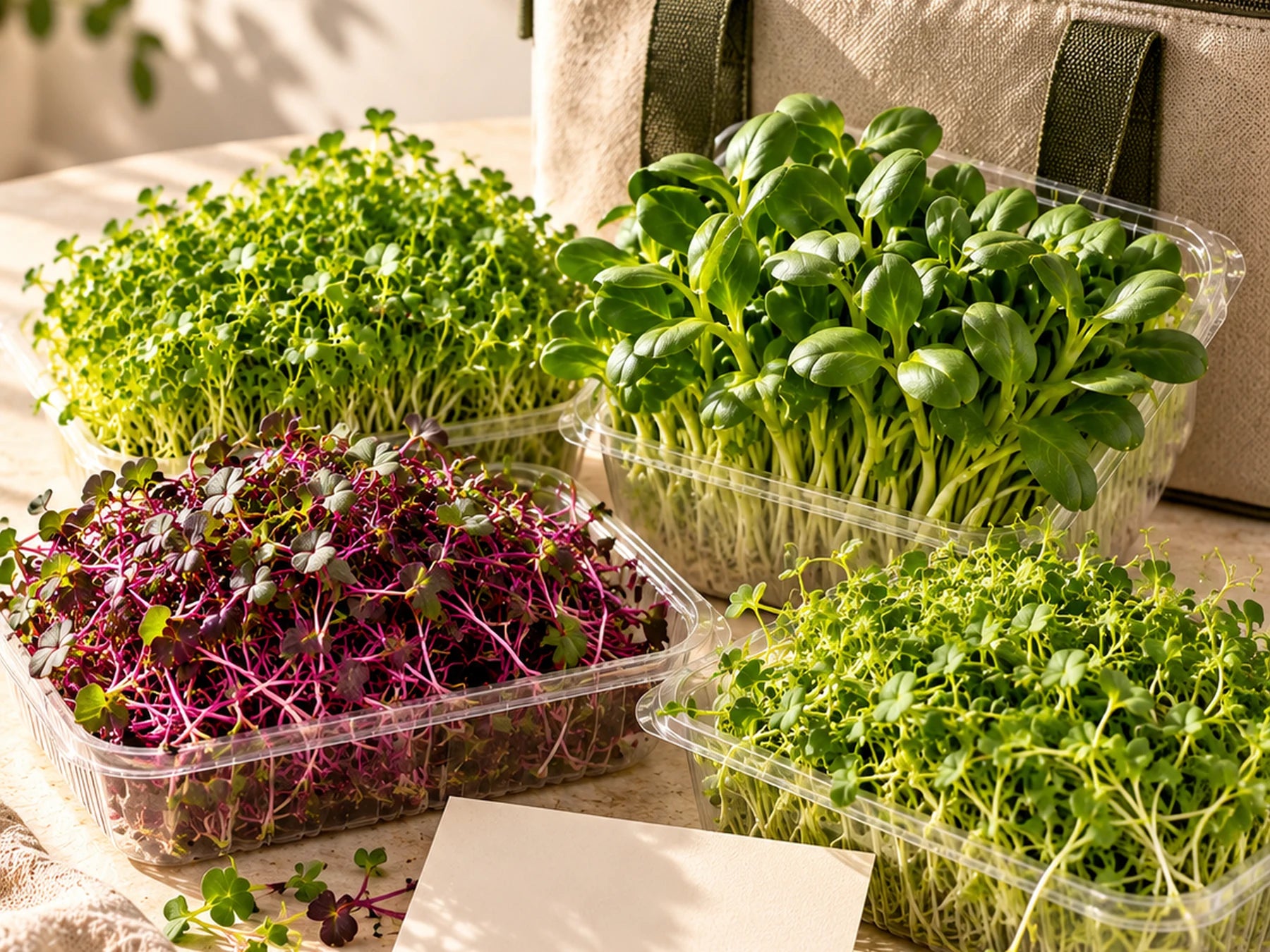
Try four varieties and see what earns a place in your fridge.
One-time purchase. Nothing renews automatically.
Only 20 kits each week · Order by Wednesday at 9 PM for this week’s harvest.
Why microgreens?
Microgreens are vegetables harvested early in their growth, when a lot is happening in a very small amount of plant tissue.
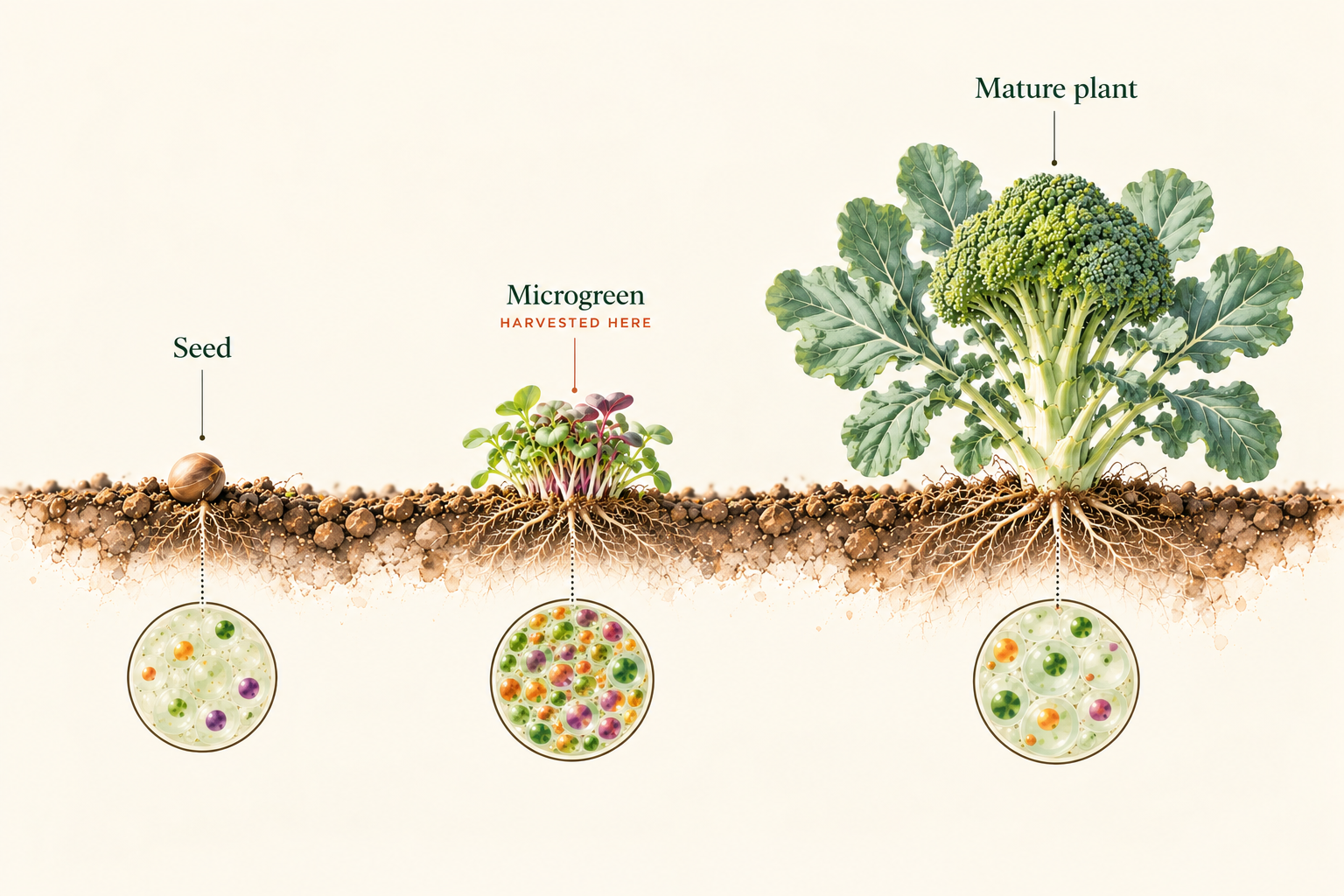
In many varieties, researchers have found specific vitamins and plant compounds at several times the concentrations measured in their mature counterparts.
That can include carotenoids, glucosinolates, phenolic compounds, vitamins, and other phytochemicals—depending on the crop. The result is a small amount of food that can add a surprisingly concentrated range of plant nutrition to meals you already eat.
The exact difference varies by crop and compound.

What the circles mean
Think of each circle as the same amount of plant tissue. More dots mean a higher concentration of certain nutrients and plant compounds in that amount — not that the smaller plant contains more total nutrition than the entire mature plant.
In many varieties, researchers have measured higher concentrations of specific nutrients and plant compounds at the microgreen stage than in the mature plant.
Conceptual illustration. Actual differences vary by crop and compound.

From harvest to fridge
Once microgreens are harvested, they continue to change. Time, handling, and temperature swings can affect their texture, flavor, quality, and the retention of certain nutrients and plant compounds.
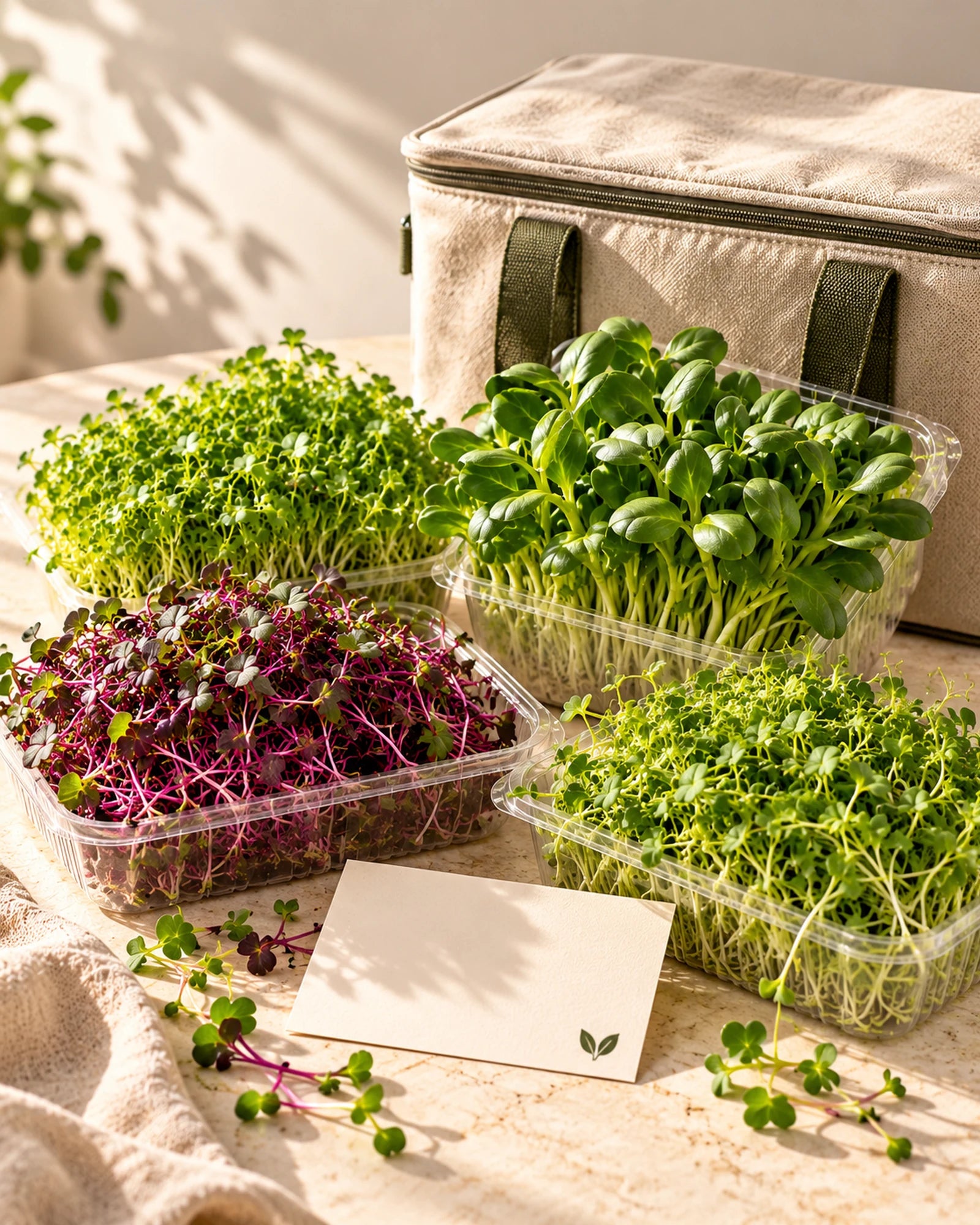
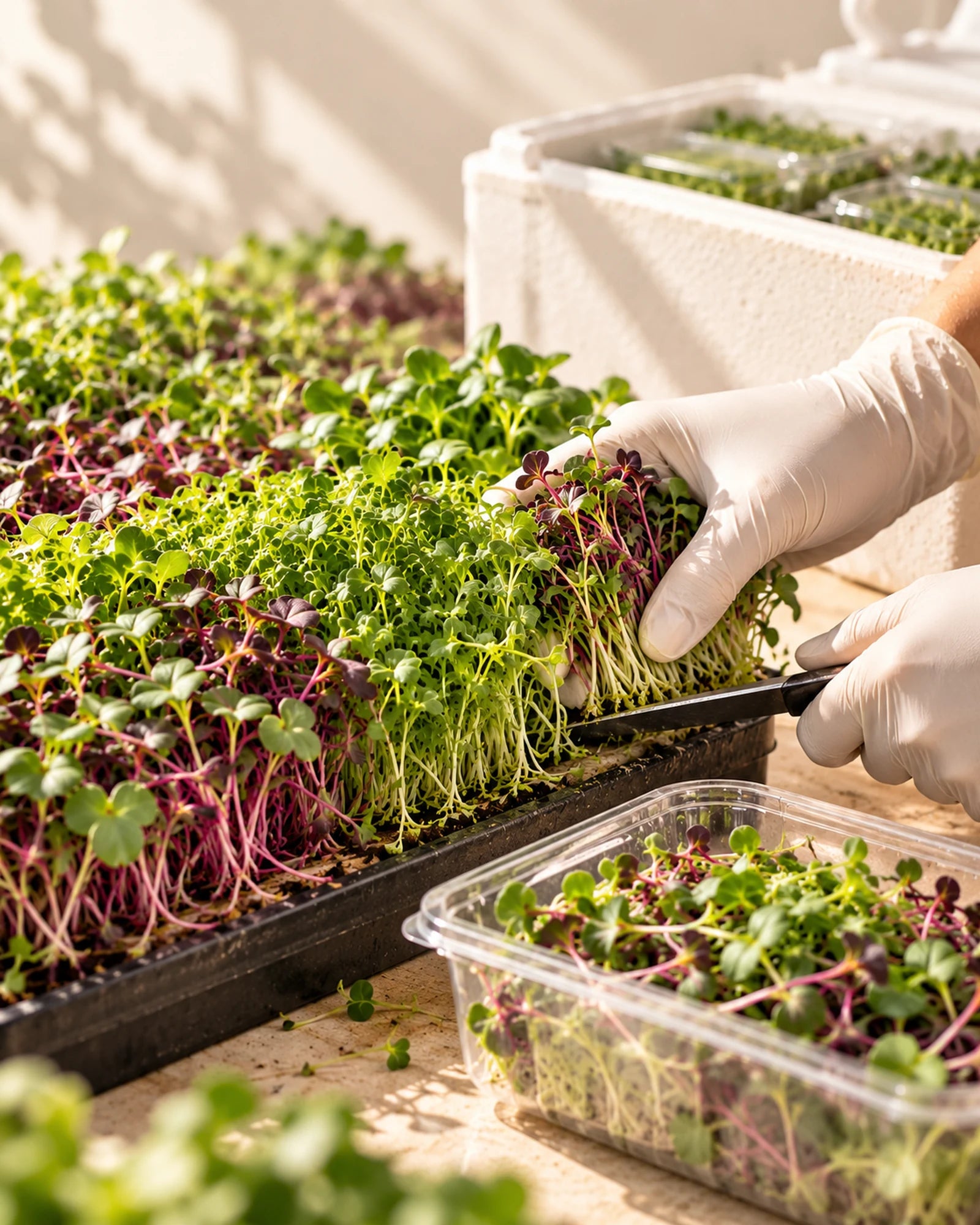
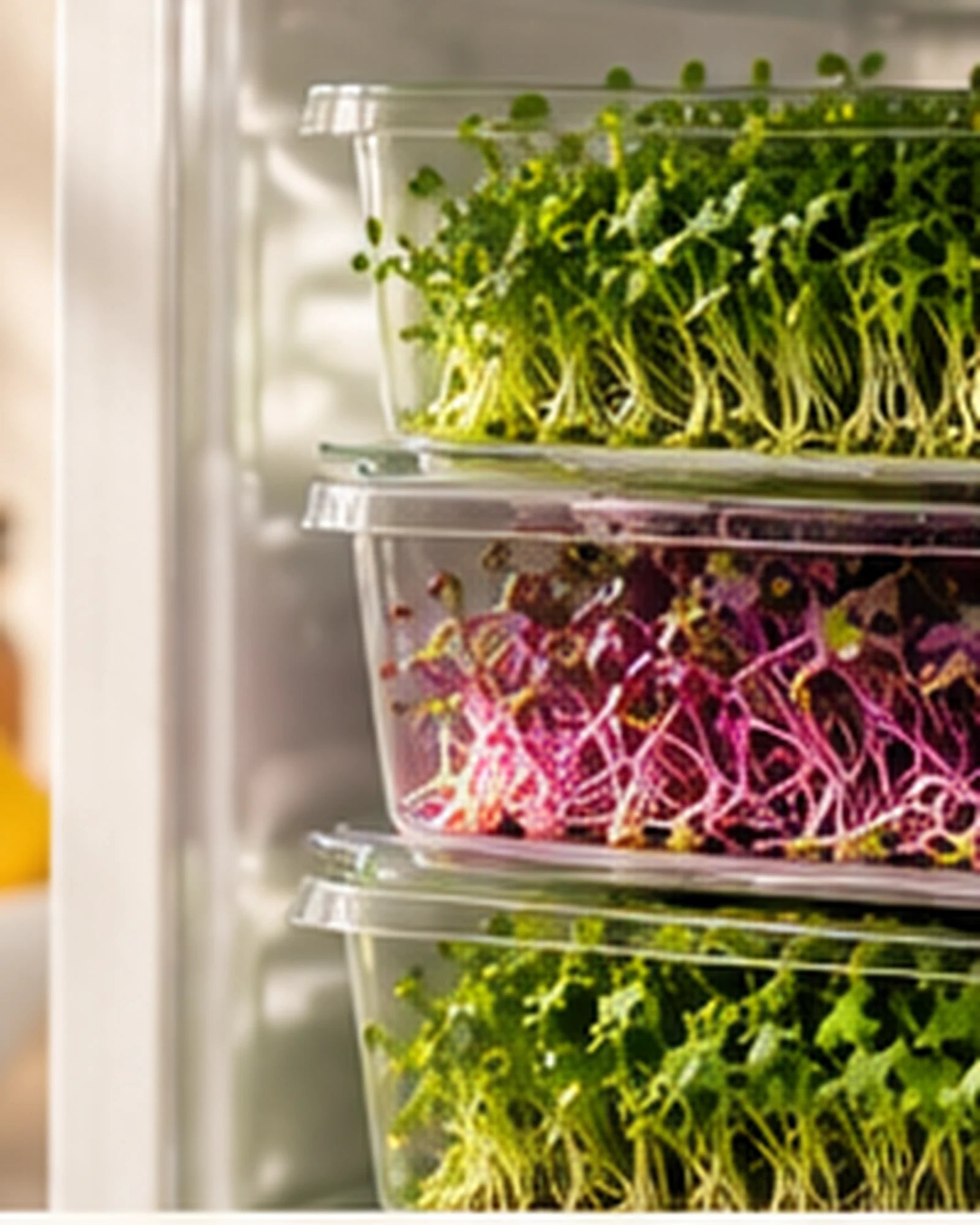
That’s why we keep the path from harvest to your fridge short, gentle, and temperature-controlled. We grow to order, harvest close to delivery, handle the greens as little as possible, and use insulated cooler bags to protect them from heat and unnecessary temperature changes along the way.
Less time. Less handling. Fewer temperature swings.

Actually easy to eat
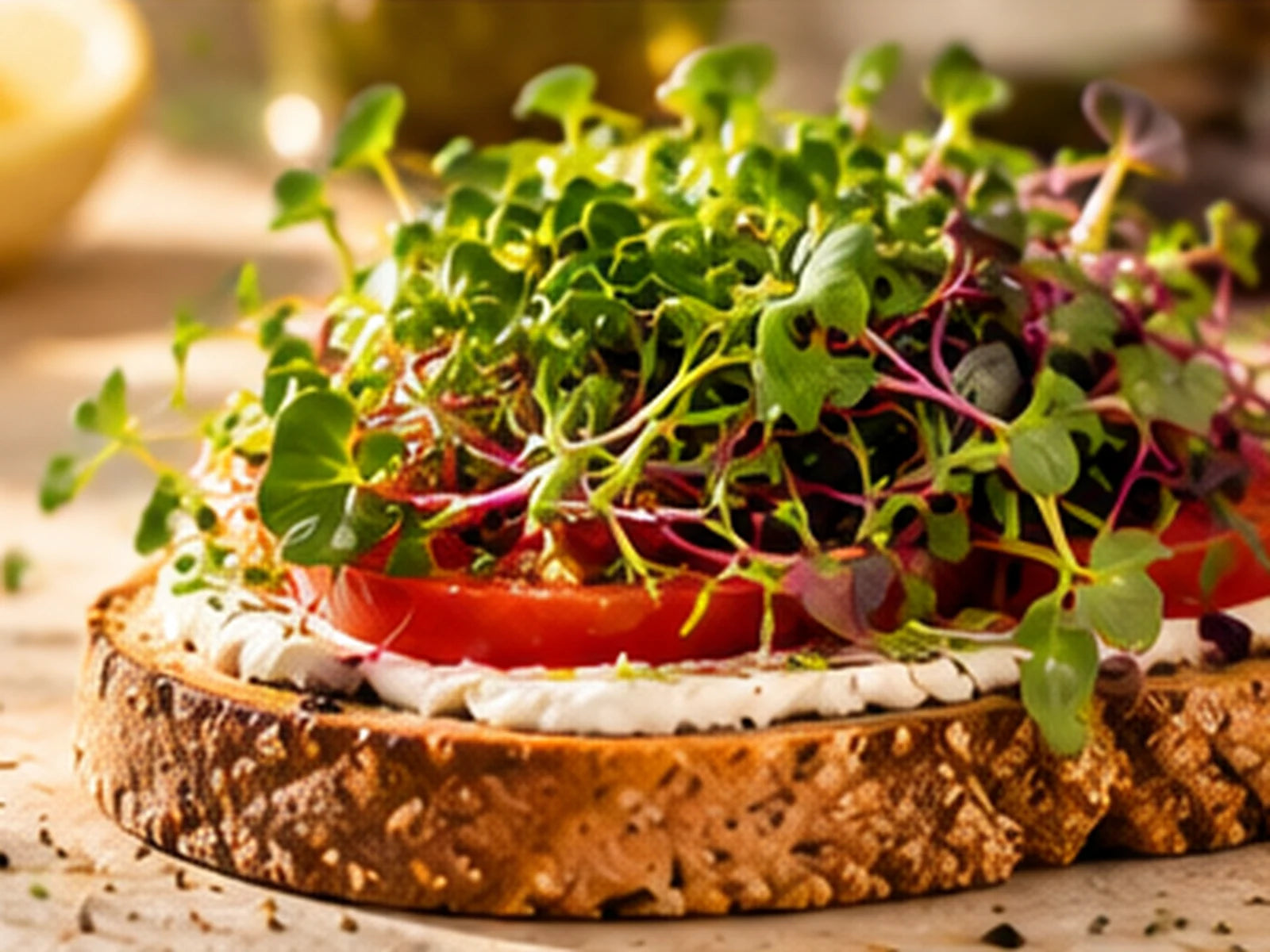
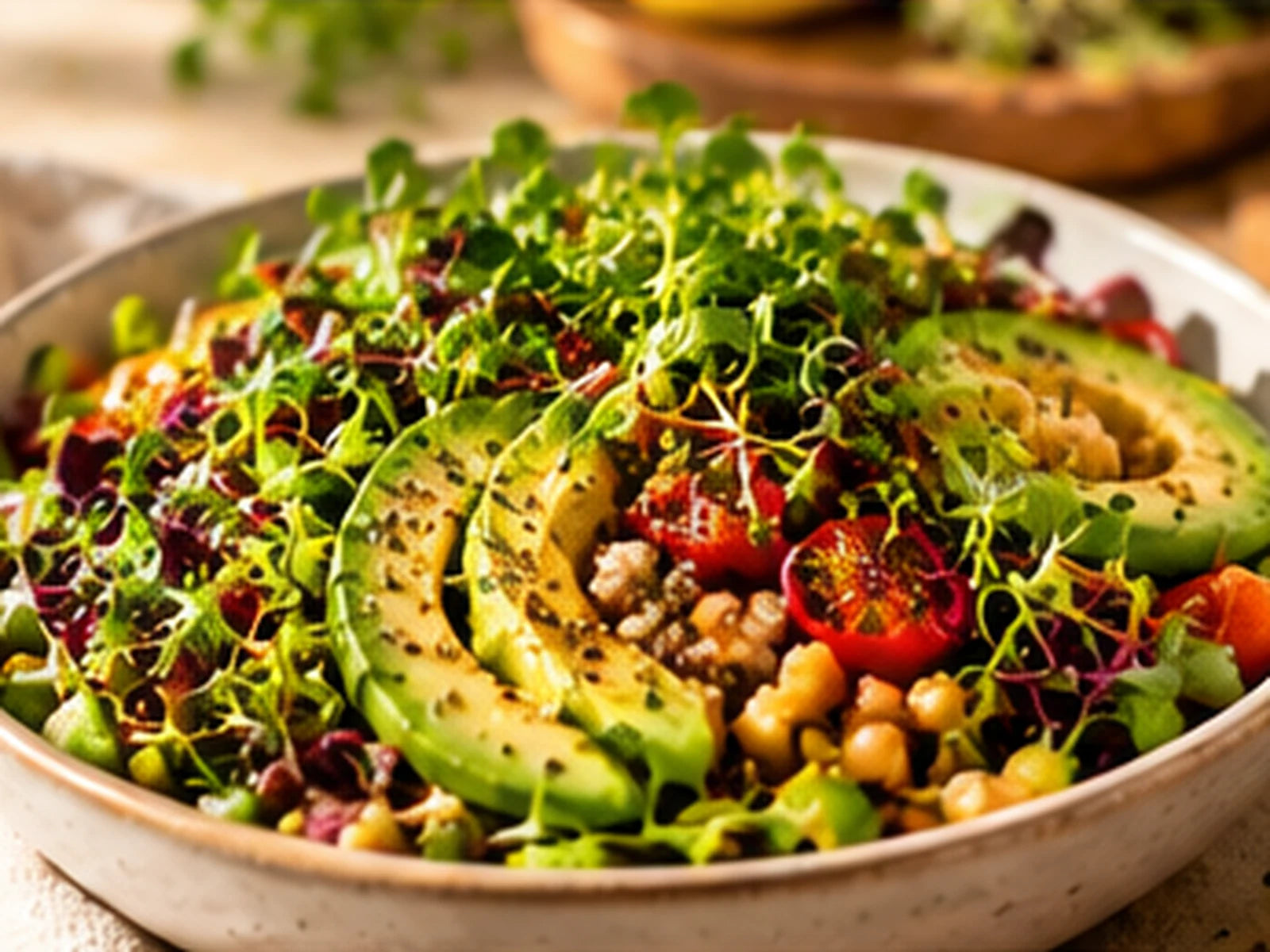
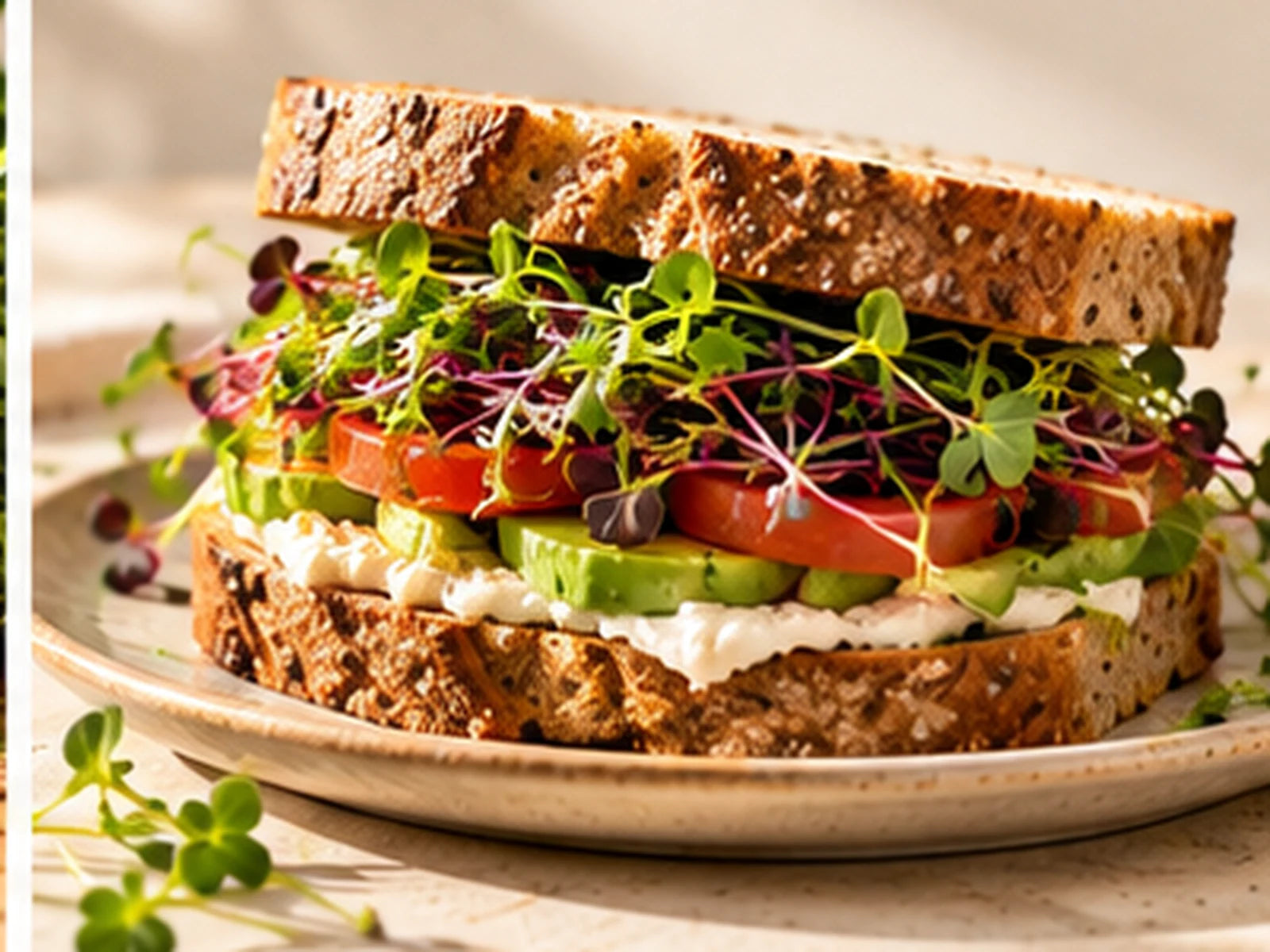
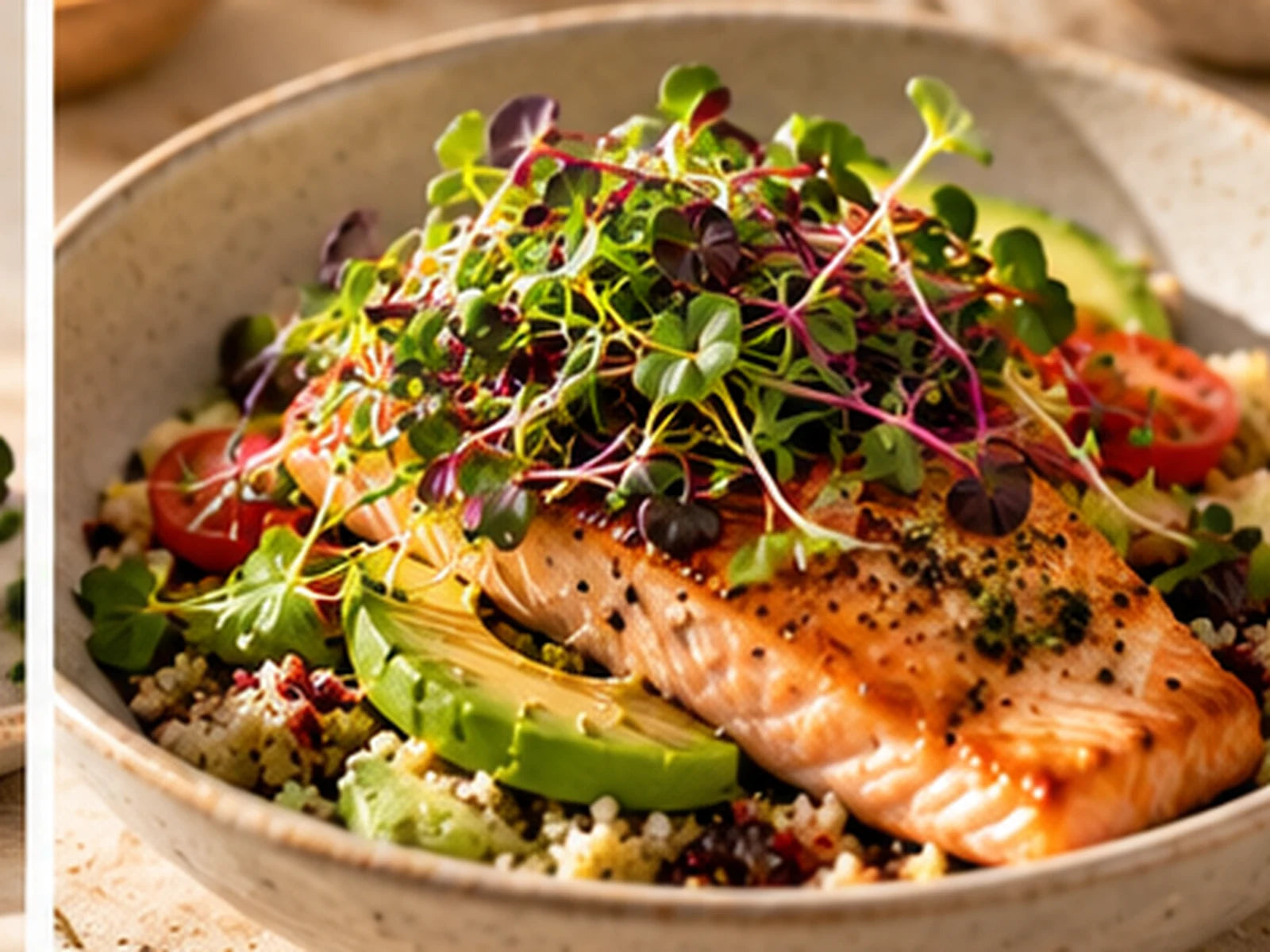
No complicated recipes. No chopping or cooking required. Add microgreens to eggs, sandwiches, bowls, tacos, pasta, chicken, fish, steak, smoothies—or whatever is already on the table.
Fresh greens are in your fridge, ready for you anytime.
The healthy choice becomes easier to repeat.


Real customer proof
“I’m a busy professional, and knowing these are available every week makes the planning of which vegetables I will be fixing for meals so much easier.”
“I really love having them constantly on hand! The best thing is the fresh taste and quality.”
“The flavor in microgreens is that prominent & delicious!”
“The pre-delivery information on how to incorporate them into meals is useful.”

Know who grows your food
I grow microgreens because I want to make fresh, nutrient-dense food easier to actually eat every day.
I’m still personally involved in growing, harvesting, packing, and getting the greens to customers. And if you ever have a question about a variety, how to use it, or anything you received, you can reach the person who actually grew it.
— Han
Food feels different when you know who grew it.
Curious about the science?
Start with the practical takeaway—or follow the biology all the way down to the compounds and mechanisms that make different varieties interesting.
After you know what you like
Choose the setup that makes it easiest to keep fresh greens around.
The simplest option. We handle the mix so you can focus on eating them.
30-Day Money-Back Promise
Explore the Fresh Greens Plan →Choose the varieties and quantities that fit you best.
Build your order →
Useful questions
We grow and handle our greens in a controlled environment with strict cleaning and sanitation practices, but they’re still fresh produce. We recommend giving them a gentle rinse under cool running water just before eating, then drying them lightly. Don’t wash them before storing them—added moisture can shorten their shelf life.
Most varieties stay fresh for about 10–14 days when kept refrigerated and dry, and some can last longer depending on the variety and storage conditions. Because your greens reach your fridge so soon after harvest, you’re starting with most of their usable life still ahead of you.
They’re different growing stages and are produced differently. Sprouts are germinated in very moist conditions and are typically eaten whole—seed, root, and shoot. Microgreens grow longer, develop leaves under light, and are harvested above the growing medium, leaving the roots and seed behind. Microgreens are still fresh raw produce, so normal produce-safety practices still apply.
Try them for yourself
$30 of fresh microgreens for $5. Four varieties. Free local delivery. Cooler bag included.
Get the Greens Habit Kit — $5